|
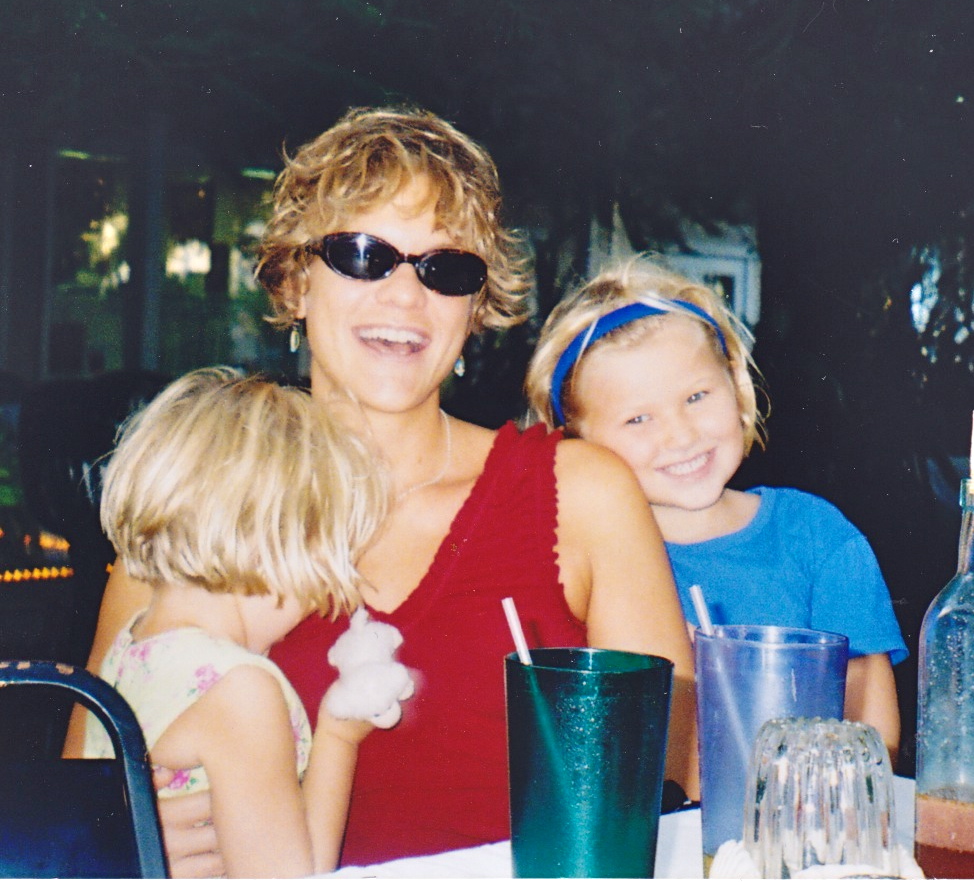
| Hanging out at Mead Chapel |
 |
| Wedding Day. Arthur Miller and Marilyn Monroe, July 1956 |
|
|
 |
| My happy place. Lake Waccabuc |
When I was a very little kid Marilyn Monroe and Arthur Miller showed
up in New York, in search of a setting for their wedding. A small,
family-owned chapel near our house at Lake Waccabuc was considered.
But the good people in charge of the lovely Mead Chapel vetoed the Miller/Monroe bid to wed in that breathtakingly beautiful place
because of the event’s attaché of friends and family, fans,
reporters, photographers and assorted rubber-neckers. Who could resist
the chance of a glimpse of America’s most famous sexpot? None of our
neighbors wanted that kind of a circus going on in our back yards. It
was probably a wise decision. On the day of their civil wedding
ceremony, a young reporter from
Paris-Match magazine was killed when
her car, racing along a curving country road toward the Monroe/Miller
pre-nup press conference, crashed into a tree. And so the couple
slipped into the White Plains County Court House and quietly married.
Two days later, July 1, 1956, there was a small and private Jewish
ceremony in the Waccabuc home of Miller’s literary agent, Kay Brown.
Those are the facts. But, as I said, I was a wee thing then and
somehow I got it into my head that the wedding had actually happened
at the Mead Chapel. Many times I hiked past that sweet spot and
thought of Marilyn, who died her infamous death just six summers
later. For years I took visitors to see the chapel where, I told them,
Marilyn Monroe married. I posed for pictures there. I meditated there.
I had schoolgirl dreams of having my own wedding there. Perhaps if Marilyn's wedding had happened in that beautiful chapel a brighter light
might have shone on Marilyn’s marriage, and on the rest of her sad
life.
Marilyn was 30 years old when she married Arthur Miller. I think it
was her finest hour. In photos taken at the time, Marilyn seems at the
very height of her spectacular luminescence, clutching the arm of her
husband like a grateful survivor plucked from an icy sea after a shipwreck. I once read that on the back of one of those wedding pictures
she’d written “Hope. Hope. Hope.”
Would it be too melodramatic to say I felt some of my finest hours
there at Waccabuc? I remember when my parents were happy there. I
remember the monstrous groans of the lake when it was frozen over
with ice on full-mooned winter nights. I remember the first delicious
dip into the lake on warm days in late May. My friend Tina Kaupe, who
also lived in Waccabuc as a child, and I sometimes talk about
Waccabuc, of how much we loved growing up there, of how we love it
still, and of how, if one of us were to hit the lottery, the first
thing we would surely do is buy a house there.
 |
| Producer Frank Taylor is the guy holding up the ladder. On the set of The Misfits. 1960. |
 |
| The Misfits was Clark Gable's last film. Marilyn's last, too. |
Remembering Marilyn is a trek along a marshy trail of historic images,
movie stars, black and white TV, neurosis, champagne, pills, erotica,
expectations, sex-pectations, literature, film, profound hunger,
horror, greed, but also, fun. I have a Marilyn Monroe Museum in my
head and I visit it often, lifting each bitter and sweet truth up to
the light like a diamond with a thousand glittering facets. I never
tire of turning the prism of Marilyn’s light this way and that.
I have a shelf bulging with Marilyn books, a collection that grows
with each birthday and Christmas. I have Marilyn knic-knaks, a
magnet on my fridge, a postcard on permanent display on my dresser, an
Andy Warhol print of Marilyn on my bedroom wall.
“How many times did you think of Marilyn Monroe today?” I asked my
husband, as I was writing this.
“Um . . . not once,” he answered. “Why? Is something going on with her?”
 |
| My friend, Key West writer Alyson Crean, grew up in Nevada and remembers drinking with her father at this Dayton, Nevada bar, used as a setting in The Misfits. |
Something is always going on with her! Marilyn is a template, a role
model and a cautionary tale. Marilyn is every woman, realized, failed,
reinvented, loved, adored, maimed and murdered. And finally, a legend.
I was in a store the other day examining a display of Marilyn Monroe clocks. A young girl was looking at them, too.
“I love Marilyn,” she sighed. “I’m gonna see if my mom will buy this for me.”
“What do you like about Marilyn,” I asked her.
“I love her self-confidence,” she said, testifying to Marilyn’s
remarkable skill as a model.
I was greatly impressed by the film,
My Week with Marilyn. As a major
Marilyn fan, I didn’t expect much from it. I can’t think of any movie
about Marilyn that justly portrays Marilyn as I understand her, till now. I was
mesmerized. Actress Michelle Williams creates a very real Marilyn, the
very woman I believe Marilyn Monroe to have been. I believe Marilyn
was that forlorn and lost beauty portrayed by Williams, who surely
studied Marilyn and nailed her character better than anyone ever
before. In that film Marilyn is portrayed as a user and a self-abuser, luscious as
a ripe piece of fruit, and clearly destined, as we all are, to lose.
Williams gave us a glimpse into the frail heart and simpering soul of
a very sad woman. Indeed, Marilyn had lost so much by the time she was
36 years old that the normal course of human events became too heavy a
burden for her to bear, well before it does for most of us.
Frank Taylor, producer of the film,
The Misfits, lived in Key West. The
film was written by Arthur Miller as a homage to his famous wife. Of
course I asked Taylor to tell me about Marilyn, as she was when he
knew her, near the end of her remarkable life.
“She had a need to seduce every man, woman and child she ever met,”
Frank said. “And it worked. Everyone fell in love with her. She used
the story of her horrible childhood for sympathy. You wanted to
protect her."
 |
| After the fall . . . Marilyn seems small, drained of vitality, in this June, 1962 photo. Weeks later, she was dead. |
Frank went on to explain how once Marilyn had someone securely in her
thrall, her warm charm could quickly turn to cold contempt. And so she
was not to be trusted. And she trusted no one.
There is a scene in
The Misfits where Marilyn’s character celebrates
newly constructed stairs, built for her by her lover Clark Gable. The
three steps enable her to easily enter or exit their very modest
shack. Marilyn goes up and down those stairs, gleeful, childlike,
saying: “I can go in. I can go out. I can go in. I can go out.”
And so she lived her life. Going in. Going out. Going in. Going out.
And going out.